
 Polski
 Deutsch
 Русский

Types of Advertising
- 23 May, 2018
- Narzędzia promocji
- 0 Comments

TYPES OF ADVERTISING BASED ON THE EXAMPLE OF AGROCENTRUM
In the feed supply industry, a quick change of business partner is impossible (the specific feed composition characteristic of a given manufacturer, guiding the client through nutritional consultants, veterinarians, etc.); the money involved is substantial, the risk is high, and the supplier's knowledge of the specifics of production is very extensive. The company therefore strives above all to build its image and to educate the client so that they make the best possible use of the delivered product while also intensifying production.
This is the purpose of brochures (which are hard to call advertising in the common sense of the word — rather informational); they contain information about the products and their advantages. The role of printed materials is above all to make contact with a potential client (that is, a competitor's client); clients receive them, of course, during visits by representatives and meetings at trade fairs or exhibitions, but in my opinion a client who keeps up to date with the offer does not use them — they are handed out as a courtesy (the competing company Provimi has practically abandoned publishing informational materials altogether, relying on materials posted online, but as a member of a corporation this company pursues marketing by concluding agreements at the central level, e.g. with the Indykpol company, which entails taking over the servicing of a very large number of clients essentially without advertising).
The company tries to stand out from the competition with an individual layout, mainly referencing farm animals (photos of cattle, poultry); it also divides products into particular categories according to their recipients, that is, pigs, cattle, poultry and other animals. It is also common to reach smaller farmers (in terms of livestock, since they may be large grain suppliers who raise animals in small numbers) through so-called mobile stores — Agromobiles. In this case, clients are given leaflets structurally similar to supermarket flyers.
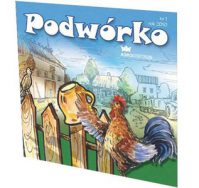
To distinguish itself from the competition, the company introduced into its layout graphic elements drawn in ink, watercolor and Conte crayons. This is clearly meant to set the company apart graphically from the competition, while at the same time creating the image of a customer-friendly company — non-aggressive on the market, Polish, and rooted in tradition. The first element was a poster calendar, whose friendly artwork was meant to encourage the client to take it home; the motif was then transferred onto a T-shirt (rural clients no longer accept the gadgets they are given uncritically — the donor's logo should also be discreetly woven into the artwork or even hidden). At the trade fair in Szepietowo (no small matter, with as many as 150 thousand participants and spectators), Agrocentrum handed out the first issue of the children's magazine Podwórko, featuring a continuation of the artwork that children could color in, answer riddles, solve crosswords, and so on. The task of this magazine is to maintain a bond with the current client (and their family), but also to reach the homes of competitors' clients non-invasively and build there the image of a positive company.
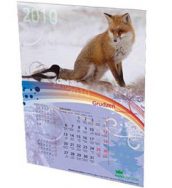

Toward the end of the year, the company hands out company calendars to clients (original 13-page, poster or triangular ones); this is combined with meetings with business partners and thanks for the year-long cooperation. This is a good form of promotion — useful and attractive to the client, displayed in a prominent place, so the client (and the people around them) have a great deal of contact with the company's advertising, which is not pushy or invasive (like, for example, television advertising) but placed there thanks to the client's own will.
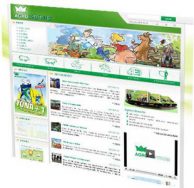
Recently the company has created a new website; graphically it references the drawn artwork, while having the character of a portal, an informational one. The site is meant to move toward establishing contact with the client, informing them about events in the company and the industry, and teaching the latest trends and technologies. Steps were immediately taken to position the site in the Google search engine, both organically (mainly under phrases such as manufacturer of feed and concentrates for cattle, pigs, poultry, etc.) and through a Google AdWords campaign under phrases characterizing Agrocentrum's business. Companies in the feed industry do not yet take advantage of the benefits of the Internet to such a great extent, so phrases in Google AdWords are fairly cheap; on the other hand, however, online advertising will not result in direct product sales — rather in building brand awareness and complementing traditional forms of sales.
DIRECTIONS OF CHANGE
In my opinion, the company should differentiate itself from the competition in terms of advertising, so launching a graphic line that draws a little on humor and on illustrations in children's books is a good idea. Moving toward humor and publications aimed at children will create a positive image while bypassing the competition's activities. This year's 13-page calendar will also be attractive to the client without straying thematically from the nature of the business (agriculture around the world with an emphasis on exotic topics).
I would suggest further developing the website, tying clients to the information that appears on it. Given the specific nature of the industry, and hence the bond between client and feed manufacturer, I would try to build a community around the company and its website, e.g. by also using Facebook, and try to exchange industry information with trade portals — drawing on their information and feeding their sites with company news. More serious clients will become even more professional and, like the rest of society, will increasingly use the Internet. Whoever establishes a serious presence here first will win in this field.
Rafał Sadowski
Excerpt from the diploma thesis "Metody promocji dóbr przemysłowych na przykładzie firm działających na rynku rolniczym" (Methods of Promoting Industrial Goods Based on the Example of Companies Operating in the Agricultural Market)







0 Comments