
 Polski
 Deutsch
 Русский

Communication with the Customer: The Biofaktor Case
- 08 May, 2018
- Narzędzia promocji
- 0 Comments

COMMUNICATION WITH THE CUSTOMER
Ways of Communicating with Customers, Illustrated by the Biofaktor Company
The main form of contact with veterinary wholesalers remains direct contact: sending offers, telephone contact, and visits by sales representatives and the sales director. Distribution agreements are also an important element, usually concluded for a year; they ensure better commercial terms for the seller and greater assurance of steady purchases from the manufacturer. Both the company website and printed materials (flyers, brochures) serve only an informational role, supporting direct contacts.
In the case of veterinarians, the primary way of reaching the customer is also direct contact through 12 sales representatives, each with a territory divided into counties; the website and printed materials likewise serve only an informational and supporting role. An important part, however, is played by veterinary exhibitions, mainly of equipment and medicines (e.g., VetMedica in Łódź). Veterinary symposia organized by academic centers—for example, the National Veterinary Institute in Puławy, the University of Life Sciences in Wrocław, or the University of Warmia and Mazury—are held for specialists in a given field. Symposia are also organized by wholesalers of veterinary medicines for their customers (veterinarians), to which manufacturers are invited as speakers; their aim is to present the latest knowledge combined with a medicine offer. A veterinarian can also learn about a manufacturer's offer from so-called indexes of veterinary preparations and drug catalogs.
An important element of contact with customers (both veterinarians and wholesalers) is training and team-building trips to touristically interesting regions of the world. During such trips, the company shares the latest product information, builds customer loyalty around itself, and also expresses thanks for fruitful commercial cooperation.
Types of Advertising
In the case of the Biofaktor company, it is hard to speak of advertising in the common sense. The regulations themselves prohibit directing advertising straight to the end consumer; the only beneficiary of promotion can be a veterinarian or a veterinary wholesaler.
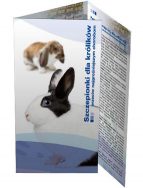
Printed materials of a strictly informational nature are issued—that is, composition, type of packaging, dosage, and so on. These are primarily flyers and brochures grouping the company's offer by a given market segment, e.g., preparations for pigeons, and the company's product catalog. The drawback of all these materials is a lack of graphic consistency—the company has no developed, unified visual identity system.
A separate group of materials are so-called supporting materials, which nonetheless carry advertising, e.g., dog health booklets handed out by veterinarians for their patients (a form resembling a human health booklet) and posters informing about the mandatory rabies vaccination.
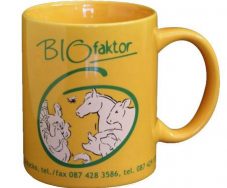
At the end of the year, the company issues three-tier calendars and also makes promotional items (pens, mugs, etc.); this is not a significant quantity, however, and serves more of a courtesy purpose (not to arrive at a visit empty-handed).
The company has a website on which the emphasis has been placed on practical, informational content, such as a list of the medicines produced or the documents and certificates required in this kind of activity.
A separate advertising medium is the trade veterinary press, in which Biofaktor regularly places information about the company as a drug manufacturer as well as about specific products; these include, among others: Magazyn Weterynaryjny (Veterinary Magazine), Życie Weterynaryjne (Veterinary Life), and Weterynaria w Praktyce (Veterinary in Practice). Advertisements are also placed in the trade press of livestock producers: Hodowca Drobiu (Poultry Breeder), Hodowca Trzody Chlewnej (Pig Breeder), Hodowca Bydła (Cattle Breeder), and Indyk Polski (Polish Turkey).


Directions of Change
The company operates in a very specific market, one with major legal restrictions on advertising; the group of potential customers is limited, transparent, and classified—yet thanks to this the market is well recognized and fairly close contact is maintained with it. I believe Biofaktor should focus on efforts aimed at greater brand recognition, as well as at even closer contact with customers.
First and foremost, I would focus on developing a coherent visual identity—that is, a graphic link between the printed materials (at the moment most of them differ from one another quite markedly), the website, and press advertisements. I would also place greater emphasis on the website, trying to use this medium to convey more information about industry trends, upcoming meetings, and training sessions; through this we would encourage veterinarians and end customers to visit the site more often and thus bond more closely with the company. I would also try to create a community that could give feedback on new trends, solve problems, and support one another, all centered on the manufacturer. I would also try to use Facebook as an increasingly common medium, directing the people gathered on the profile to the home site. It would also be a good medium for information about events such as changes in the law, the launch of a new medicine, or an upcoming date for a trade fair, seminar, or training.
I would also bet on informational advertising online: industry portals, AdSense and AdWords advertising. As a still poorly used medium, in this industry it is cheap, so it could be an excellent complement to the traditional channels of information about the company—although direct contact will remain the leading one.
All these activities should be coordinated by a person responsible for public relations (such a position does not yet exist), and I believe this is essential, considering the fact that the company is constantly developing and bringing new preparations to market (in the pharmaceutical industry, due to pathogens building resistance to a drug, as well as changes in composition related to scientific discoveries, this process is necessary), and customers should be kept informed of it on an ongoing basis.
Rafał Sadowski
An excerpt from the diploma thesis "Metody promocji dóbr przemysłowych na przykładzie firm działających na rynku rolniczym" (Methods of Promoting Industrial Goods, Based on Companies Operating in the Agricultural Market).







0 Comments